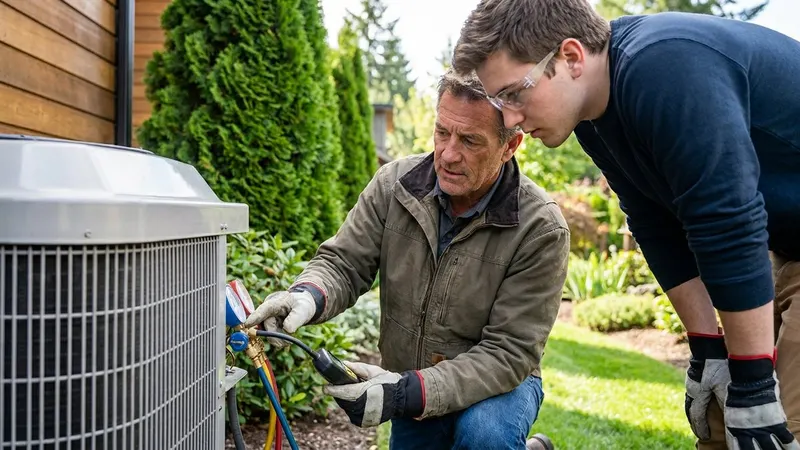
Top tips for HVAC technicians: sharpen diagnostic skills, keep up with new technology, and communicate clearly with customers. If you need hands-on help, see our AC repair service page.
Need HVAC help in Bellevue?
Contact HVAC Service Bellevue for practical help with repairs, maintenance, and replacement planning.
Call (425) 598-0416
Request a Quote
Understanding HVAC Systems
I’ve seen a lot of HVAC systems in my day, and let me tell you, they’re not as complicated as they might seem at first glance. These systems are the unsung heroes of our homes, keeping us comfy year-round. Let’s break down how they work and what makes them tick.
Components of HVAC Systems
In my years on the job, I’ve gotten up close and personal with every part of an HVAC system. The heart of it all is the furnace or heat pump, which keeps you toasty when it’s cold outside. Then you’ve got the condensing unit sitting outside, working hard to cool your home in summer.
Don’t forget about the ductwork - it’s like the circulatory system of your house, moving air where it needs to go. The thermostat is your control center, telling the system when to kick on and off.
One part I always pay special attention to is the heat exchanger. It’s crucial for safety and efficiency. The evaporator coil is another key player, especially in cooling mode.
The Science of Comfort
Now, I’m no scientist, but I know a thing or two about how HVAC systems create comfort. It’s all about heat transfer - moving heat from one place to another. In winter, we’re pulling heat from the outdoors (even when it’s cold!) and pumping it inside.
Summer’s the opposite - we’re taking heat from your home and dumping it outside. The refrigerant in those tubes does the heavy lifting here, changing from liquid to gas and back again.
Humidity control is another big part of the comfort equation. Too much moisture and you feel sticky. Too little and you’re reaching for the lip balm.
System Types and Designs
I’ve installed just about every type of HVAC system out there. You’ve got your standard split systems with an outdoor unit and an indoor unit. Then there are packaged units that put everything in one box outside.
Heat pumps are great for milder climates - they can heat and cool your home. For colder areas, I often recommend a furnace for heating and a separate AC for cooling.
Ductless mini-splits are becoming more popular, especially for additions or older homes without ductwork. They’re efficient and give you more control over individual rooms.
No matter what type of system you’ve got, regular maintenance is key. Clean filters, clear vents, and annual check-ups will keep your HVAC running smoothly for years to come.
Preparation and Education
Getting ready for an HVAC career takes time and effort. I’ve seen many techs succeed by following a few key steps. Let’s dive into what it takes to prepare.
I always tell new techs to start with HVAC school. It’s the foundation you need. In my experience, programs usually last 6 months to 2 years. You’ll learn the basics of heating, cooling, and refrigeration systems.
After school, certification is crucial. I recommend getting NATE certified. It shows employers you know your stuff. There are different levels, from entry-level to specialized certs.
Don’t forget about safety certifications too. EPA Section 608 is a must for handling refrigerants. OSHA training is also important for jobsite safety.
On-the-Job Experience
Book smarts are great, but nothing beats hands-on experience. I always say, “The real learning starts when you’re in the field.” Try to find an apprenticeship or entry-level position.
Working with experienced techs is gold. They’ll teach you tricks you won’t find in any manual. Pay attention to how they troubleshoot and interact with customers.
Keep a notebook. Write down everything you learn each day. Trust me, you’ll thank yourself later when you’re trying to remember how to fix that weird furnace issue.
Continual Learning and Development
The HVAC field is always changing. New tech, new regulations - you’ve got to keep up. I make it a point to learn something new every week.
Attend workshops and seminars when you can. Many suppliers offer free training on their products. Take advantage of that.
Online resources are great too. I’ve found some awesome tips for techs on HVAC blogs. They often cover the latest industry trends.
Don’t be afraid to ask questions. The best techs I know are always curious. If you don’t understand something, speak up. It’s how we all get better at our craft.
Installation Best Practices
I’ve seen my fair share of HVAC installations, and let me tell you, doing it right makes all the difference. A proper install keeps your system running smooth and saves you headaches down the road. Let’s dive into some key areas to nail during installation.
Efficient Ductwork Installation
When it comes to ductwork, size matters. I always make sure to size ducts properly based on the system’s airflow requirements. Undersized ducts lead to poor performance and wasted energy.
I’m a stickler for sealing every joint and connection. Leaky ducts can lose up to 30% of conditioned air. That’s money flying out the window! I use mastic sealant or metal tape - never duct tape, despite the name.
Insulation is crucial too. I wrap ducts in unconditioned spaces like attics with R-6 or R-8 insulation. This prevents energy loss and condensation issues.
Proper support is key. I hang ducts securely every 4-6 feet to prevent sagging. Sagging ducts restrict airflow and collect moisture.
Accurate Sizing and Fit
Choosing the right size HVAC system is critical. An oversized unit cycles on and off too frequently, while an undersized one struggles to keep up.
I always perform a detailed load calculation using Manual J. This accounts for factors like:
- Home size and layout
- Insulation levels
- Window types and orientation
- Local climate
Once I’ve got the right size, proper fit is next. I leave enough clearance around the unit for airflow and maintenance access.
I make sure the system is level during installation. Even a slight tilt can cause issues with drainage and refrigerant flow.
Smart Thermostat Integration
Smart thermostats are game-changers for efficiency and comfort. I love installing these high-tech helpers.
First, I choose a compatible model. Not all smart thermostats work with every HVAC system. I check voltage requirements and features.
Wiring is crucial. I carefully label and connect each wire to the right terminal. A common wire (C-wire) is often needed for power.
I always test the thermostat thoroughly after installation. This includes checking all modes: heating, cooling, and fan operation.
Finally, I take time to show homeowners how to use their new smart thermostat. Understanding features like scheduling and remote access helps them get the most out of their system.
Maintenance and Troubleshooting
I’ve learned a thing or two about keeping HVAC systems running smoothly over the years. Let’s dive into some key tips for maintenance and troubleshooting that’ll save you time and headaches.
Performing Preventative Maintenance
Regular furnace maintenance is crucial to keep systems humming along. I always start with the basics - changing filters every 1-3 months. It’s amazing how much this simple step can improve efficiency.
Next, I clean those coils. Dirty coils make systems work harder than they need to. A good brushing and some coil cleaner does wonders.
Don’t forget about the condensate drain line. A clogged line can cause water damage, so I flush it with vinegar or bleach solution yearly.
For outdoor units, I clear away any debris like leaves or grass clippings. Good airflow is key for these units to function properly.
Lastly, I lubricate all moving parts and tighten electrical connections. This prevents unnecessary wear and tear on the system.
Effective Troubleshooting Techniques
When issues pop up, I’ve got a tried-and-true process. First, I always check the thermostat. It’s often the culprit and an easy fix.
If that’s not it, I inspect the circuit breakers and fuses. A tripped breaker or blown fuse can shut down the whole system.
Next, I look at airflow. Blocked vents or dirty filters can cause all sorts of problems. I make sure nothing’s obstructing the airflow.
For cooling issues, I check refrigerant levels. Low refrigerant can mean poor cooling and higher energy bills.
If I’m dealing with a furnace, I always check the pilot light or ignition system. No heat often means no flame.
Making Accurate Diagnoses
Accurate diagnoses start with good listening skills. I always ask the homeowner about any odd noises, smells, or changes in performance they’ve noticed.
Then, I use my senses. I listen for unusual sounds, feel for airflow issues, and smell for any burning odors.
I don’t skimp on testing. I use multimeters to check electrical components and pressure gauges to assess refrigerant levels.
When in doubt, I refer to manufacturer specs. Every system is a bit different, and those details matter.
Lastly, I keep detailed notes. Good documentation helps me spot patterns and make better diagnoses over time.
Enhancing Customer Experience
As an HVAC technician, I’ve learned that great service goes beyond fixing equipment. It’s about making customers feel valued and respected. Let’s dive into some key areas where we can really shine.
Excellence in Customer Service
I always say, “Treat every home like it’s your own.” This mindset helps me provide top-notch service. When I arrive, I greet customers with a smile and introduce myself. I make sure to listen carefully to their concerns.
It’s crucial to be prompt and punctual. Customers appreciate technicians who respect their time. I always aim to arrive within the scheduled window.
I also follow up after the job. A quick call or text can go a long way. It shows I care about their comfort even after I’ve left.
Here’s a quick checklist I follow:
- Greet with a smile
- Listen attentively
- Arrive on time
- Follow up after service
Clear Communication Strategies
Clear communication is key in our line of work. I always explain things in simple terms, avoiding technical jargon. If I need to use a technical term, I make sure to explain it.
I find it helpful to use visual aids. Sometimes I’ll sketch out a diagram or show pictures on my tablet. This helps customers understand complex systems better.
Before starting work, I outline what I’ll be doing and how long it might take. I also provide a detailed estimate. This helps avoid surprises later.
During the job, I keep customers in the loop. If I run into unexpected issues, I explain them clearly and offer solutions.
Building Trust and Professionalism
Trust is earned, not given. I always show up in a clean uniform with my ID badge visible. My truck is well-organized and clean too. These small details matter.
I’m honest about what needs to be done. If a repair can wait, I say so. If a replacement is necessary, I explain why. Customers appreciate this transparency.
I also take the time to educate customers about their HVAC systems. I might share tips on maintenance or energy efficiency. This builds trust and shows I care about their long-term comfort.
Lastly, I always clean up after myself. I leave the work area as clean, or cleaner, than I found it. It’s a simple way to show respect for the customer’s home.
Safety and Professionalism
Here’s the practical answer: It’s not just about getting the job done - it’s about doing it right and going home in one piece at the end of the day.
Adhering to Safety Protocols
First things first, always wear your protective gear. I’m talking goggles, gloves, and earplugs. These aren’t just fancy accessories - they’re your lifeline.
I’ve seen too many techs skip this step, and trust me, it’s not worth the risk. When I’m working with chemicals or near dangerous equipment, I make sure I’m suited up properly.
Another big one is electrical safety. I always double-check that the power’s off before I start tinkering. It only takes a second, but it could save your life.
Remember, every job site is different. I always do a quick safety check when I arrive. Look for hazards, plan your escape route, and make sure you’ve got a clear path to your tools.
Speaking of tools, using them correctly is crucial. I’ve got a whole arsenal of HVAC tools, and each one has its own quirks.
My multimeter is my best friend on the job. I use it to test voltages and currents safely. But here’s the kicker - you’ve got to know how to read it right, or you could be in for a nasty surprise.
When I’m working with refrigerants, I always use my recovery machine. It’s not just about following regulations - it’s about protecting yourself and the environment.
Don’t forget about ladder safety. I’ve seen guys take some nasty spills. Always maintain three points of contact and never overreach. It’s better to climb down and move the ladder than to end up in the hospital.
Time Management for Technicians
Now, let’s talk time management. It’s not just about being efficient - it’s about staying safe when you’re under pressure.
I always start my day by planning my route. It saves time and fuel, and it means I’m not rushing between jobs. When you’re rushed, that’s when mistakes happen.
On each job, I give myself a few minutes to assess the situation before diving in. It might seem like wasted time, but it actually saves me trouble down the line.
I keep my truck organized too. Everything has its place. When I need a tool, I know exactly where to find it. This cuts down on frustration and helps me work more safely.
Remember, it’s okay to take breaks. I’d rather take five minutes to clear my head than make a mistake because I’m tired or stressed. Stay hydrated, folks - it’s hot work we do!
Leveraging Technology
I’ve seen firsthand how the right tech can make or break an HVAC job. Let’s talk about some game-changing tools that’ll make your life easier and your work better.
Utilizing HVAC Software
HVAC software is a real lifesaver in our line of work. I’ve used ServiceTitan, and let me tell you, it’s like having an extra set of hands. It helps me schedule jobs, track inventory, and even manage billing. No more shuffling through paper work orders or losing track of parts.
Here’s what I love about good HVAC software:
- Easy scheduling and dispatching
- Real-time updates on job status
- Quick access to customer history
- Inventory tracking at my fingertips
I can’t stress enough how much time this saves me. Plus, it makes me look super professional to my customers. They’re always impressed when I can pull up their entire service history on my tablet.
Staying Updated with Industry Tech
In this field, if you’re not learning, you’re falling behind. I make it a point to stay on top of the latest HVAC tech. It’s not just about fancy gadgets - it’s about being the best technician I can be.
I regularly attend trade shows and workshops to get hands-on experience with new equipment. Online forums and YouTube channels are goldmines for tips and tricks too. I’ve picked up so many useful skills this way.
Some tech I’m excited about:
- Smart thermostats
- Energy-efficient systems
- Diagnostic tools with AI capabilities
As an HVAC contractor, I know my customers count on me to know this stuff. When I can explain the benefits of new tech, it builds trust and often leads to better solutions for their homes.
Tips and Tricks of the Trade
Here’s the practical answer: Here are some HVAC tips and tricks that’ll make your job easier and keep your customers happy.
First off, safety is key. Always wear your protective gear and double-check your tools. I can’t stress this enough - it could save your life.
Next, pay attention to detail. Little things matter in this trade. A loose wire or a dirty filter can cause big problems down the line.
Here’s a pro tip: keep your work area clean. It shows professionalism and makes your job smoother. Trust me, your customers will notice.
Communication is crucial. Explain what you’re doing to the customer in simple terms. They appreciate knowing what’s going on in their own home.
Don’t be afraid to ask for help. We all started somewhere, and there’s no shame in learning from others. It’s how we get better at our craft.
Lastly, stay updated on new technologies. Our field is always changing, and keeping up will make you invaluable to your company and customers.
Frequently Asked Questions
Here’s the practical answer: But there are some key things every tech should know, from safety to customer service. Let’s dive into the nitty-gritty of what makes a great HVAC pro.
How can HVAC techs improve their troubleshooting efficiency on the job?
I always say, “Know your systems inside and out.” Start by studying common HVAC problems and their solutions. Keep a mental checklist and work through it methodically.
Use your senses. Listen for unusual noises, feel for temperature differences, and smell for any odd odors. These can be big clues.
Don’t be afraid to use diagnostic tools. A good multimeter and manifold gauge set are worth their weight in gold.
What are the essential safety protocols every HVAC technician should follow?
Safety first, always. I can’t stress this enough. Wear proper protective gear - safety glasses, gloves, and steel-toed boots are non-negotiable.
Lock out and tag out electrical systems before working on them. It could save your life.
Be careful with refrigerants. They can cause frostbite or worse if mishandled. Always use proper recovery equipment.
What advice can seasoned HVAC professionals offer to newcomers in the trade?
I tell every newbie the same thing: never stop learning. The HVAC field is always changing, with new tech and regulations coming out all the time.
Find a mentor. There’s no substitute for hands-on experience with someone who knows the ropes.
Don’t be afraid to ask questions. It’s better to ask and get it right than to guess and make a costly mistake.
Every tech needs a solid set of hand tools - screwdrivers, pliers, wrenches, you name it. They’re your bread and butter.
A good multimeter is crucial for electrical troubleshooting. It’ll save you hours of guesswork.
Don’t forget about safety equipment. Gloves, goggles, and a respirator can keep you healthy and on the job.
What steps can HVAC technicians take to ensure they’re providing top-notch customer service?
I always say, “Treat every home like it’s your own.” Be respectful, clean up after yourself, and explain things clearly to the homeowner.
Listen to the customer’s concerns. They might not know the technical terms, but they know their home best.
Follow up after the job. A quick call to make sure everything’s running smoothly goes a long way.
In what ways can HVAC technicians stay updated with the latest industry standards and technologies?
I’m a big believer in continuous education. Attend industry conferences and workshops whenever you can.
Read trade magazines and follow industry blogs. They often have great tips and news about the latest tech.
Getting certified in new technologies will make you more valuable to employers and customers alike.
Still weighing your options?
Our team can help you decide whether repair, maintenance, or replacement makes the most sense.
Call (425) 598-0416
Request a Quote